Adaptability — or why change is so difficult for us.
February 2026. So — how many of your New Year’s resolutions from January have you already abandoned? Between January 9 and 17 lies the famous “Quitter’s Day” — the point in the new year when most people give up on their good intentions.
Date: 18. February 2026
Categories: PGarticle, Personality Assessments
Book Recommendation of the Month
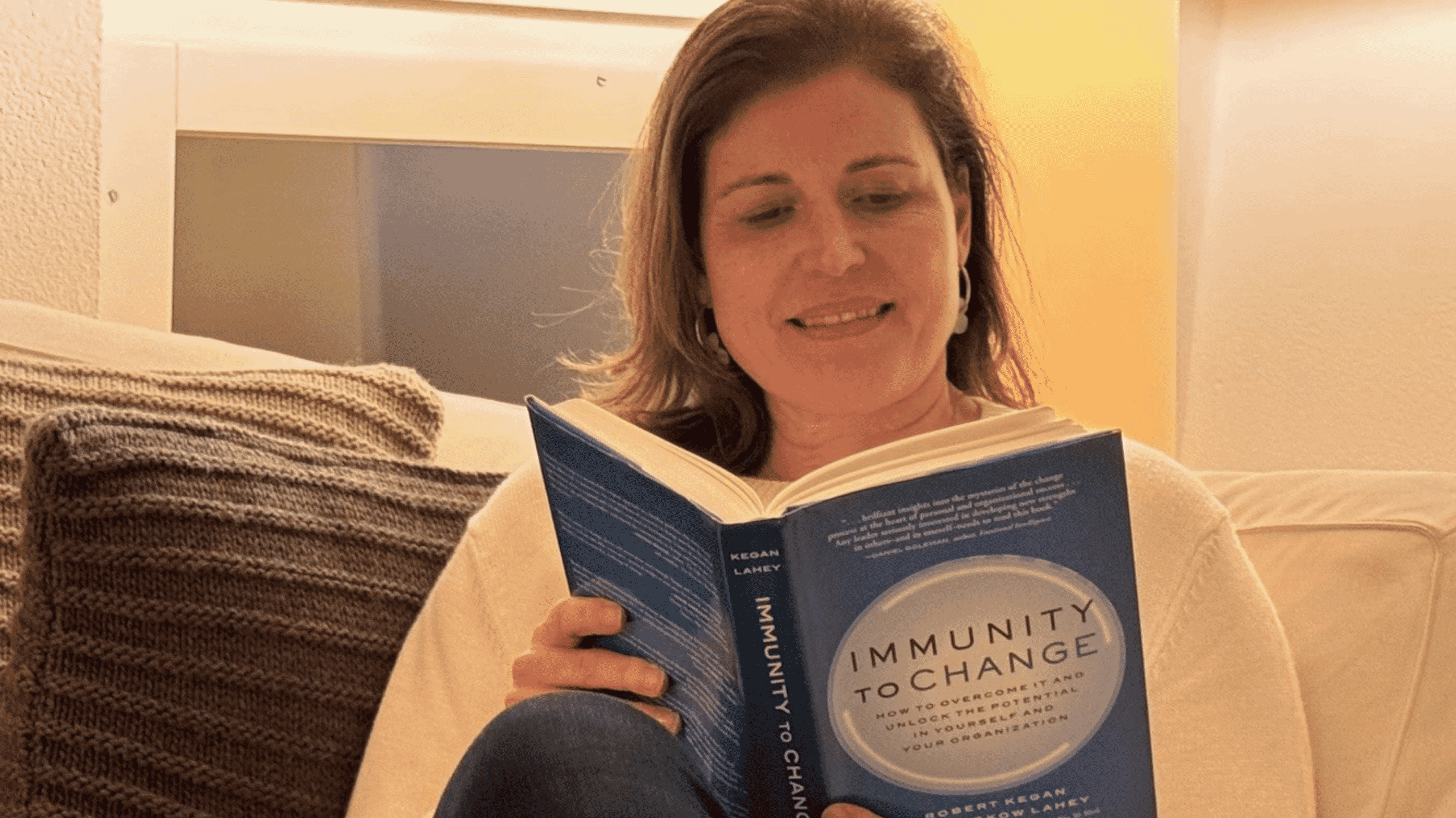
The fact is: many people want to change — and still fail. Why is that? Here is my personal book recommendation of the month: Immunity to Change by Robert Kegan and Lisa Lahey. In their book, the authors show that change is not simply a matter of motivation or discipline; often, our own behavior unconsciously works against our goals.
The Invisible “Inner” Immunity
We can be both for and against change at the same time. Alongside our conscious goals, there is an invisible inner “immunity” that protects us. This immunity is not irrational resistance but an intelligent protective mechanism — one that shields us from risks we may unconsciously fear. It is also shaped by our personal beliefs and values, which we can measure using the MVPI.
The result: we want to change something, yet often act in exactly the opposite way. The Immunity to Change model makes this inner conflict visible and helps create real, lasting change.
The Four Elements of the Immunity-to-Change Map
1. Improvement Goal The specific behavior we want to change. Example: “I want to speak more clearly and concisely in meetings.”
2. Counterproductive Behaviors The actual actions that work against the goal. Example: “I overexplain, go off on tangents, and justify myself.”
3. Hidden Competing Commitments Unconscious commitments that hold us back. Example: “I must not appear incompetent. I have to explain everything.”
4. Big Assumptions Deeply rooted beliefs that feel like unquestionable facts. Example: “If I keep things brief, others will think I have nothing to contribute.”
These assumptions are often unconscious, yet they strongly influence our behavior.
Why the Model Is So Effective
-
It does not judge resistance — behaviors that block change are interpreted as meaningful protective mechanisms.
-
It connects mindset, emotions, and behavior, showing that change is not only external but internal.
-
It enables adaptive development: not only behavior changes, but the underlying self-concept as well.
The Lever for Sustainable Change
Lasting change comes not through greater discipline, but through:
-
Becoming aware of competing commitments
-
Testing big assumptions through small, safe experiments
-
Developing a more complex self-understanding that enables new ways of acting
Conclusion
Immunity to Change shows that change is not just a question of willpower. It is the interaction between conscious goals, unconscious protective mechanisms, and deeply held assumptions. Those who recognize these dynamics can achieve real, sustainable transformation.
The Hogan personality assessments — especially the values dimension (MVPI) — help us understand what personally motivates us. Insights into the “inner side” of personality reveal what we unconsciously support or resist.
Enjoy the read!
Nicole Neubauer
Order the book here: Amazon link