Entrepreneur, wantrepreneur or CEO: who thrives in which culture?
Because sometimes the person who fits perfectly reinforces your culture. And sometimes the person who is a little different is exactly the person your culture needs.
Date: 11. September 2026
Categories: PGStudy

What makes a successful entrepreneur different from someone who wants to become one—or from a successful corporate CEO? And what can these differences teach us about culture fit?
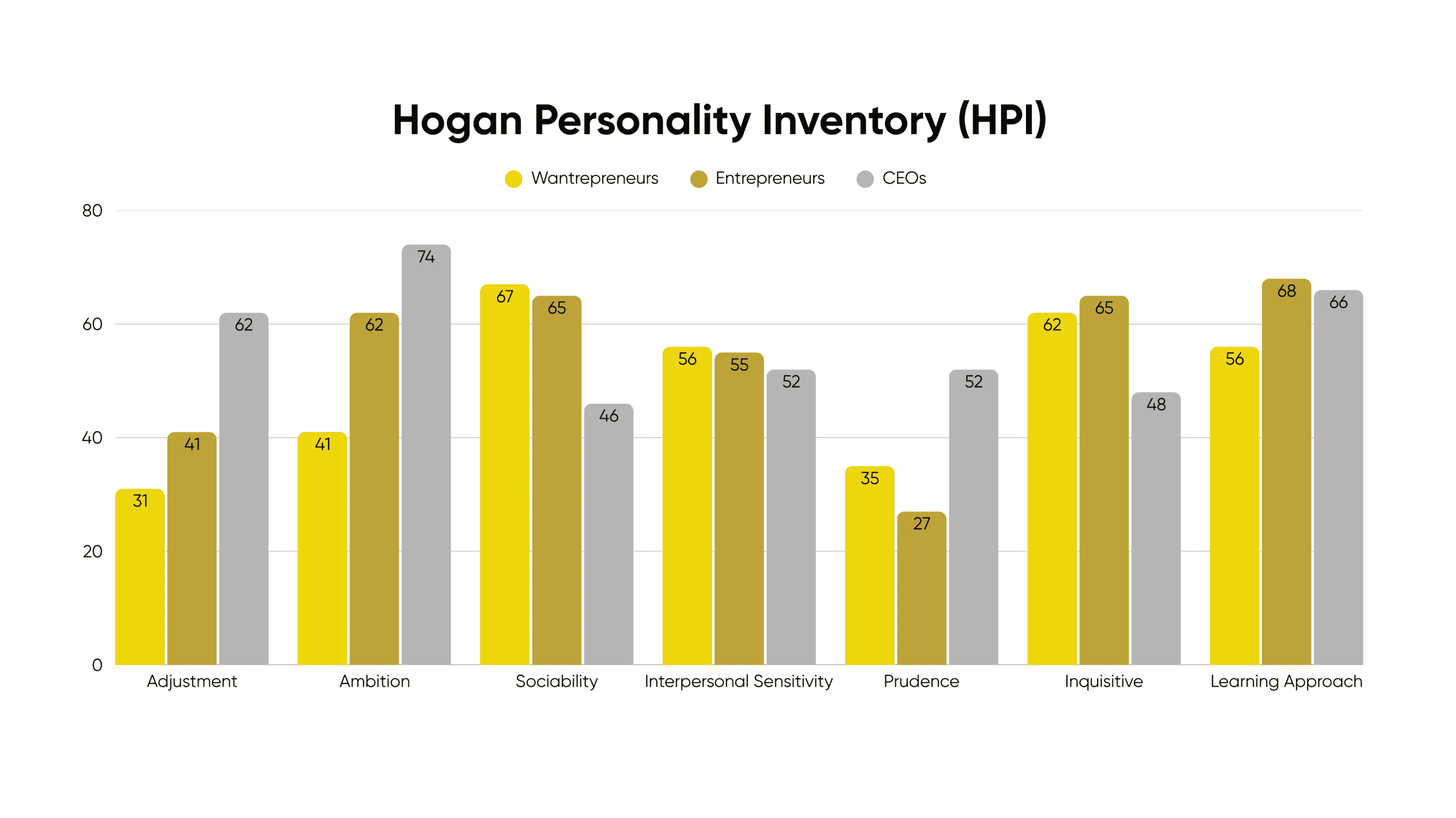
A 2025 study by researchers from Northwestern University and Hogan Assessments explored exactly this question. Using the Hogan Personality Inventory (HPI), Hogan Development Survey (HDS), and Motives, Values, Preferences Inventory (MVPI), the researchers compared 67 successful entrepreneurs, 274 “wantrepreneurs,” and 135 CEOs from Forbes Global 2000 companies. The goal was to identify the personality characteristics, potential derailers, and underlying values that distinguish people who have successfully built and scaled businesses.
What makes successful entrepreneurs different?
Successful entrepreneurs showed a profile particularly suited to environments requiring initiative, experimentation and comfort with uncertainty. Compared with wantrepreneurs, they were more ambitious and learning-oriented and less prudent and cautious. In other words, wanting to become an entrepreneur and successfully building a company are not quite the same thing—the successful founders appeared more willing to act, take risks and move forward without having every detail secured first.
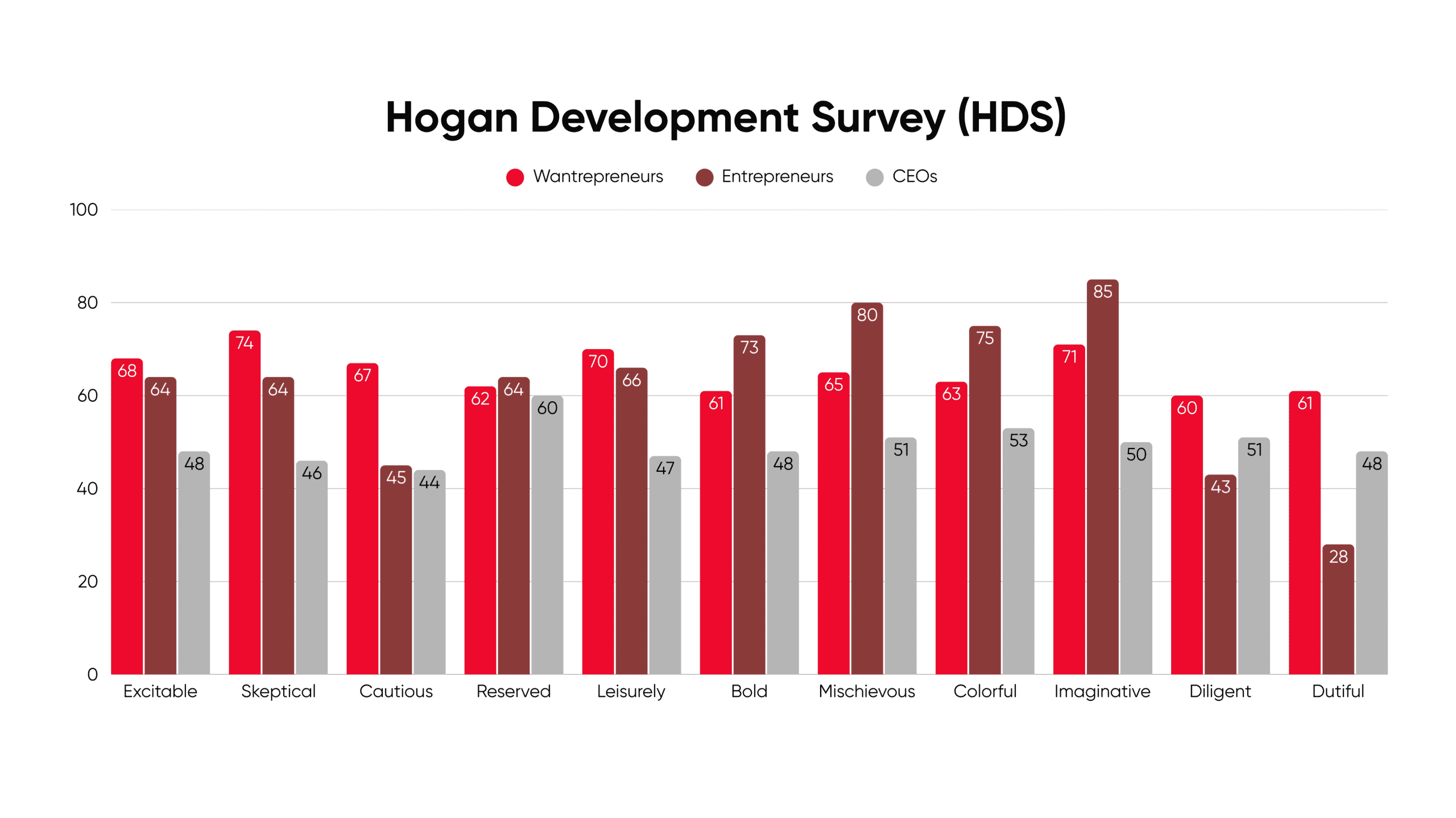
Their potential derailers also tell an interesting story. Successful entrepreneurs tended to show more of what the researchers describe as a charismatic cluster, including Bold, Mischievous and Colourful characteristics. In the right context, these tendencies can translate into confidence, willingness to take risks, visibility and an ability to inspire others. Taken too far, of course, the same characteristics can become overconfidence, impulsivity or excessive attention-seeking.
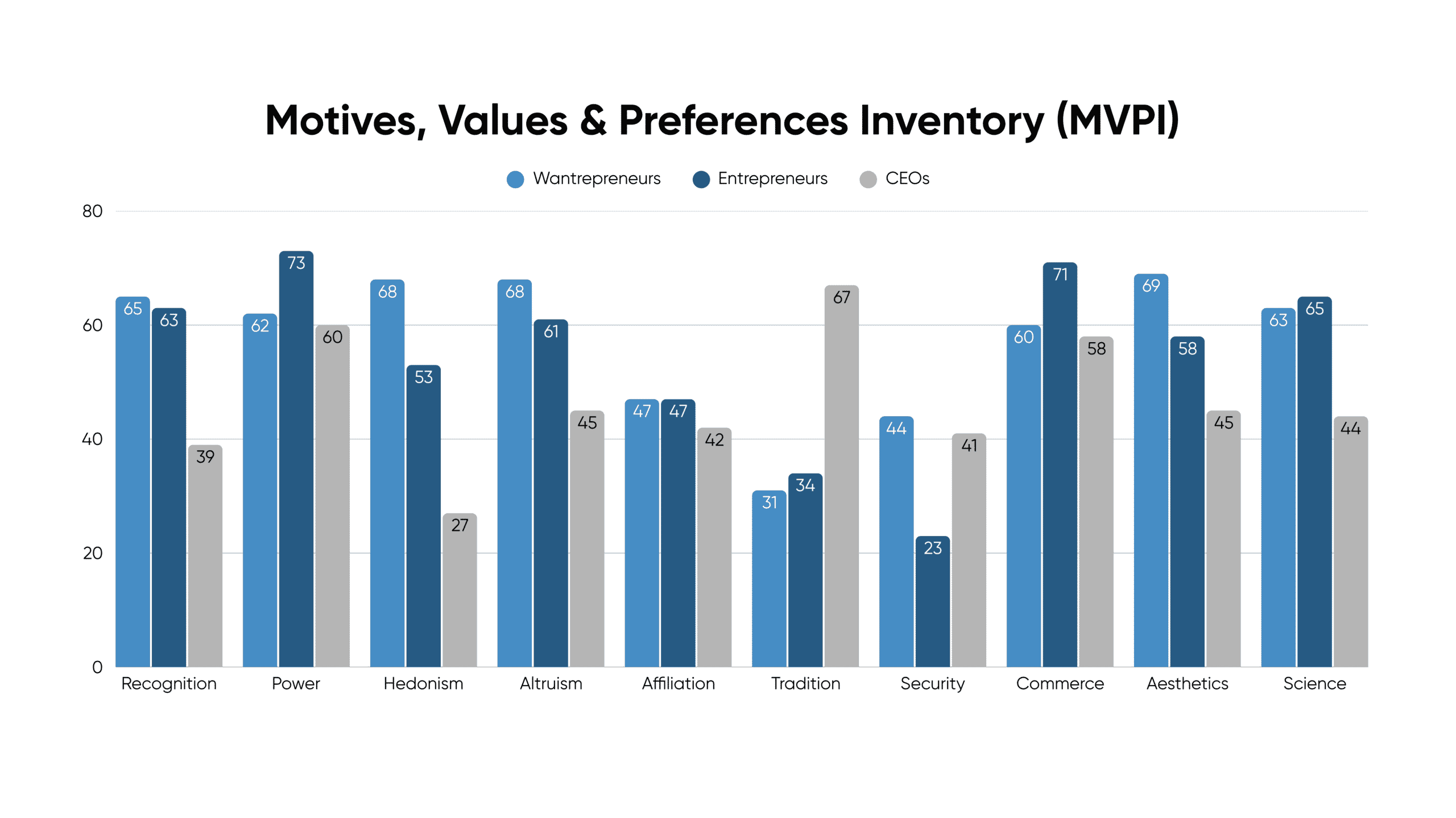
Their values and motivations add another layer. Power and Commerce were among their strongest motives, while Security was particularly low. Compared with wantrepreneurs, successful entrepreneurs were significantly higher on Power and Commerce and lower on Security, Hedonism and Aesthetics. This suggests a stronger motivation to compete, achieve results and build commercially successful businesses, combined with greater comfort operating without predictability and stability.
And how are they different from CEOs?
Interestingly, successful entrepreneurs were not simply more extreme versions of corporate CEOs.
Compared with CEOs of major global companies, entrepreneurs showed a different motivational profile: they placed greater emphasis on Power, Commerce, Recognition, Science, Hedonism and Aesthetics, while placing considerably less emphasis on Tradition. The study’s data also show substantially lower Security among entrepreneurs.
This makes sense when we consider the environments in which the two groups succeed. Entrepreneurs create something that does not yet exist. Challenging established approaches, tolerating uncertainty, generating ideas and moving quickly can therefore be highly valuable. CEOs of large established organizations, by contrast, operate within much more developed structures, systems and stakeholder environments. The researchers highlight this contrast between the more creative and inspirational entrepreneurial context and the greater emphasis on established structures among CEOs.
So, who has the “best” profile?
There isn’t one and that is where culture comes in.
Imagine placing the same person in two very different organizations. Someone who thrives on risk, challenges established ways of working and moves extremely quickly may flourish in an entrepreneurial culture undergoing rapid growth. Put that same person into a highly regulated, process-driven environment where consistency and careful execution are essential, and some of those same strengths could create friction.
Likewise, someone who values stability, structure and tradition may feel constrained in a constantly changing start-up, but could be exactly what an organization needs to bring discipline, continuity and reliable execution.
This is why understanding culture should go beyond asking whether someone simply “fits.” Personality and values can help us ask richer questions: What kind of environment allows this person to thrive? What behaviours does our culture reward? What does our organization already have plenty of—and what different perspective might this person bring?
Because sometimes the person who fits perfectly reinforces your culture. And sometimes the person who is a little different is exactly the person your culture needs.